Last Updated: July 14, 2026 — Reviewed by Brian Hayes, Licensed Master Plumber
The short answer
For bathroom ventilation in Canada, most rooms need a reliable way to remove moisture, and an exhaust fan vented outdoors is usually the practical solution. The exact requirement depends on the home, the ventilation system, and the scope of the renovation, so homeowners should confirm permit and code requirements with their municipal building department before changing the room. This 2026 guide is written for Durham Region homeowners, including people renovating in Oshawa, Ajax, and Whitby.
In a country where temperatures often dip below freezing, maintaining proper airflow and ventilation in your home is critical. One area that requires special attention is the bathroom.
The high levels of humidity and moisture generated during daily activities such as showering, bathing, and even using the sink can lead to a multitude of problems if not properly managed. This is where bathroom exhaust fans come into play.
But are they required by Canadian building codes? And is it okay to have a bathroom without ventilation? Whether you’re renovating a home in Oshawa or building new in Whitby, these are important questions. Let’s explore them in detail.
Bathroom Exhaust Fan Code Requirements in Canada
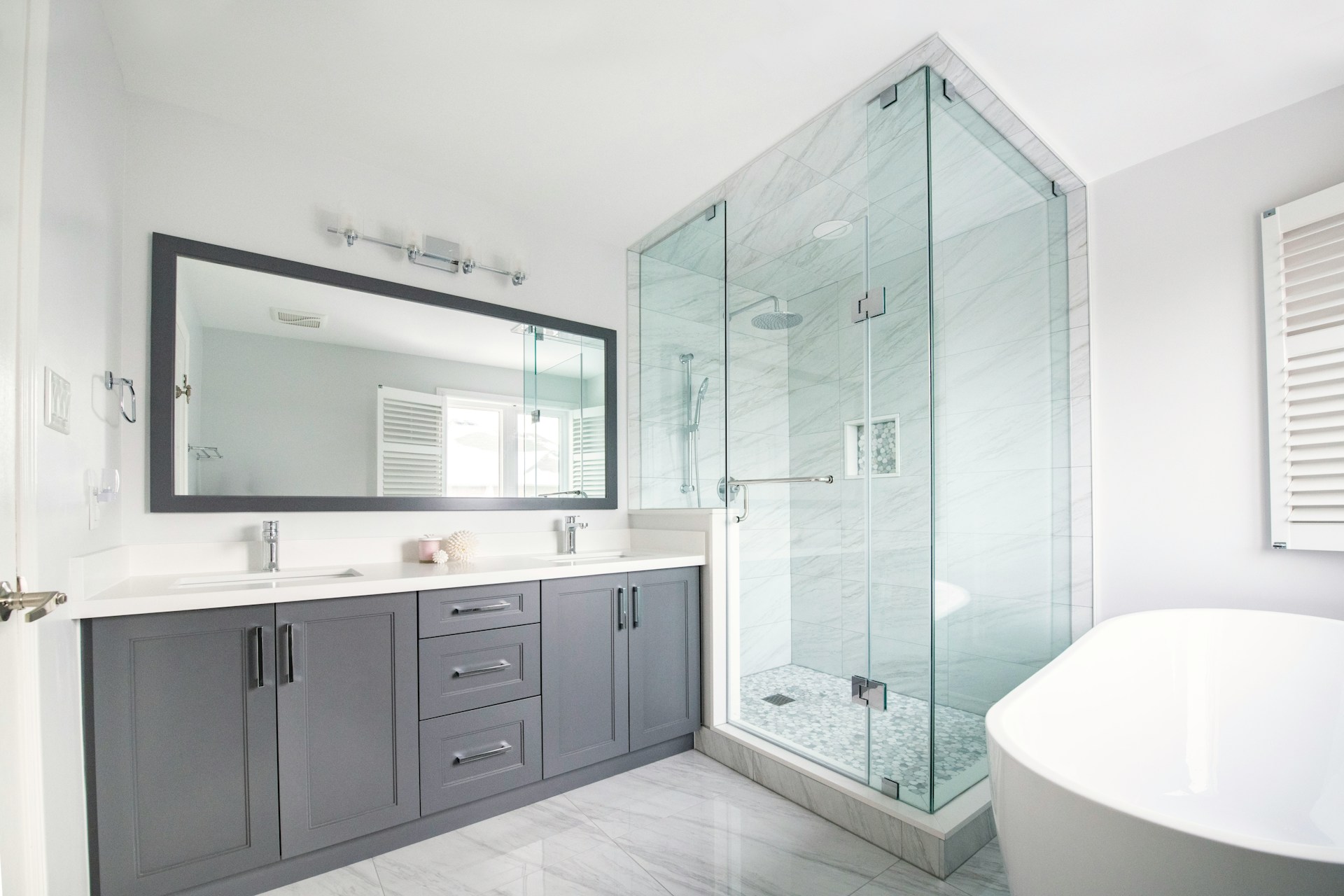
The National Building Code of Canada (NBCC) is the primary document outlining the country’s requirements for building construction and renovation. While the NBCC does not explicitly mandate the installation of bathroom exhaust fans in every scenario, it does provide clear guidelines for maintaining appropriate ventilation and air quality within residential buildings.
According to the NBCC, every residential dwelling should have a mechanical ventilation system capable of achieving the following objectives:
- Maintaining acceptable indoor air quality by providing a continuous supply of fresh outdoor air.
- Controlling humidity levels within the home by exhausting excess moisture generated by occupants, their activities, and equipment.
- Preventing the spread of pollutants and contaminants from one space to another within the dwelling.
The NBCC also outlines specific airflow requirements for various rooms and spaces within the home. For bathrooms, the code requires an exhaust airflow rate of at least 50 cubic feet per minute (CFM) when the toilet is in use. This helps to remove moist air from the space and replace it with fresh outdoor air.
Ontario Building Code (OBC) Requirements
For homeowners in Durham Region, the Ontario Building Code (OBC) is the applicable standard. The OBC largely adopts the NBCC’s ventilation provisions but includes additional requirements specific to Ontario. Under the OBC, bathrooms in new construction must have either a mechanical exhaust fan or an operable window for ventilation. However, relying solely on a window is generally considered insufficient for controlling moisture — especially during Ontario’s cold winter months when opening a window isn’t practical.
In addition to provincial codes, local building codes and bylaws in municipalities like Oshawa, Whitby, Ajax, and Pickering may have specific requirements related to bathroom exhaust fans. It’s always wise to consult with your local building department to determine the exact requirements for your area.
What If You Have a Bathroom without an Exhaust Fan?
While bathroom exhaust fans may not be explicitly required in every situation under the building code, it’s essential to consider the potential consequences of a bathroom with no fan. Without proper ventilation, excess moisture and humidity can build up in the space, leading to a number of serious issues:
- Mould and Mildew Growth: High moisture levels provide the perfect environment for mould and mildew to thrive. Not only are these fungi unsightly, but they can also pose health risks, especially for individuals with allergies or respiratory issues. In Durham Region’s humid summers, this risk is amplified.
- Warping and Damage to Materials: Prolonged exposure to moisture can cause warping and damage to wood, drywall, and other materials in your bathroom. This can lead to expensive repairs and replacements over time.
- Paint and Wallpaper Peeling: Excess moisture can cause paint and wallpaper to peel or bubble, ruining the aesthetic of your bathroom.
- Increased Energy Consumption: High humidity levels can make your home feel hotter and more uncomfortable, causing you to rely more heavily on air conditioning or other cooling methods.
- Decreased Indoor Air Quality: A lack of proper ventilation can lead to poor indoor air quality, as pollutants, allergens, and other contaminants become trapped in the space.
- Mirror and Fixture Deterioration: Without adequate airflow, moisture damages mirror backings (causing black spots), corrodes metal fixtures, and shortens the lifespan of your bathroom hardware.
How to Choose the Right Bathroom Exhaust Fan

If your bathroom doesn’t have an exhaust fan — or if your existing fan is noisy, weak, or outdated — selecting the right replacement is important. Here’s what to consider:
- CFM Rating: Choose a fan rated for the size of your bathroom. The general rule is 1 CFM per square foot of bathroom space, with a minimum of 50 CFM. For larger bathrooms (over 100 sq ft), you may need 80–150 CFM.
- Sone Rating: This measures noise level. A fan rated at 1.0 sone or less is considered quiet. Older fans often operate at 3–4 sones, which is noticeably loud.
- Features: Modern exhaust fans come with useful options like built-in LED lighting, humidity sensors that turn the fan on automatically, motion detectors, and Bluetooth speakers.
- Energy Efficiency: Look for ENERGY STAR-certified models, which use up to 60% less energy than standard fans while delivering the same airflow.
- Duct routing: Your fan should vent to the outside of the building — never into the attic, soffit, or crawlspace, as this simply relocates the moisture problem.
Signs Your Bathroom Exhaust Fan Needs Replacement
If you already have an exhaust fan but are still experiencing moisture problems, the fan may not be doing its job. Watch for these warning signs:
- The fan is excessively noisy or makes rattling sounds
- Condensation lingers on mirrors and windows long after showering
- You notice musty odours or visible mould growth
- The fan runs but doesn’t seem to pull air (hold a tissue near the fan — if it doesn’t cling, airflow is weak)
- The fan is more than 10 years old and has never been serviced
Many homeowners in older homes across Oshawa, Clarington, and Bowmanville are surprised to learn their exhaust fans either vent into the attic or have become clogged with dust and lint over the years. A professional plumbing and ventilation inspection can identify these hidden issues before they cause costly damage.
Bathroom Ventilation and Your Renovation Plans
If you’re planning a bathroom renovation, ventilation should be one of the first items on your checklist — not an afterthought. Upgrading your exhaust fan during a renovation is far easier and less expensive than retrofitting one later, since walls and ceilings are already open for access.
For homeowners considering accessible bathroom renovations, proper ventilation is especially critical. Roll-in showers and barrier-free designs can generate more splash and steam than enclosed tub-shower combinations, making a high-capacity exhaust fan essential for protecting both the occupant’s health and the room’s materials.
Conclusion
Although the National Building Code of Canada may not specifically mandate bathroom exhaust fans in every scenario, they play a vital role in ensuring appropriate ventilation, air quality, and general comfort in your home. A bathroom without proper ventilation can result in various problems, ranging from health hazards like mould exposure to expensive structural damage.
To safeguard the health of your family and maintain the structural integrity of your home, installing a properly sized and vented exhaust fan in your bathroom is one of the best investments you can make.
Need a bathroom exhaust fan installed or replaced? Contact Hayes Plumbing at 905-576-3043 for expert service throughout Oshawa and Durham Region. With over 45 years of experience, our WSIB-certified team handles everything from exhaust fan installation to complete bathroom renovations.
Additional Resources
Frequently Asked Questions
Is an exhaust fan mandatory in every Ontario bathroom?
Not in every possible situation. The requirement depends on the building, the room, the existing ventilation system, and the work being completed. For a renovation or new installation, confirm the applicable requirements with the local building department before closing walls or ceilings.
Can a window replace a bathroom exhaust fan?
An operable window can provide some ventilation, but it isn’t always a practical moisture-control plan during an Ontario winter. A properly sized fan that exhausts outdoors provides more consistent airflow after showers and baths.
How do I know whether my bathroom fan is working?
Check whether steam and mirror condensation clear within a reasonable period after use. Persistent moisture, peeling paint, musty odours, or a fan that runs without drawing air are signs that the fan, duct route, or room airflow should be inspected.
How long does an exhaust-fan installation take?
Timing depends on access above the ceiling, the duct route, exterior termination, electrical work, and whether the room is already open for renovation. An installer can confirm the scope after inspecting the bathroom and the proposed exhaust route.
Who should I contact about moisture discovered during a bathroom renovation?
Call Hayes Plumbing at (905) 576-3043 when the moisture is connected to a leak, fixture, drain, or plumbing layout. For electrical fan wiring or dedicated ventilation work, use the appropriately qualified trade for that part of the project.
Planning a bathroom renovation? Review the bathroom renovation service or request an estimate.