frozen pipe prevention Durham Region becomes a much more urgent search every January than most homeowners would like, usually right after a cold snap has already caused a problem. The good news is that the fixes that actually prevent frozen pipes are inexpensive and straightforward when they’re done before the temperature drops — not after a pipe has already split open behind a wall.
This guide covers which pipes in a Durham Region home are actually at risk, what to do before the cold hits, and what a burst pipe means for your plumbing if prevention doesn’t happen in time.
Which Pipes Actually Freeze
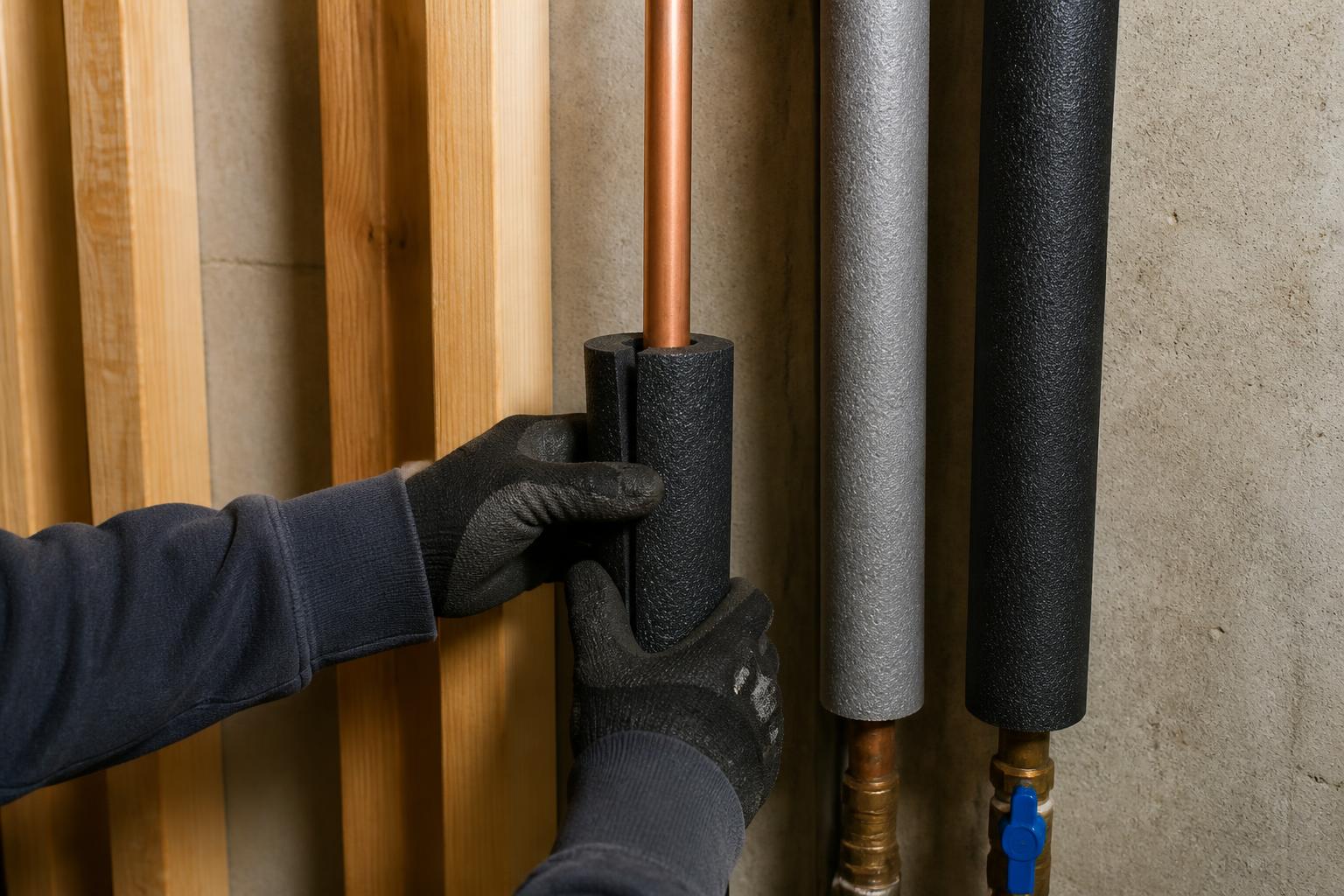
Not every pipe in a house is equally exposed. The ones that freeze are almost always in unheated or poorly insulated spaces: exterior hose bibb lines, pipes running through an uninsulated crawlspace or garage, supply lines against an exterior wall with thin or missing insulation, and anything in a vacant or seasonally-unheated property. Interior pipes running through heated living space rarely freeze even during a hard cold snap, which is why prevention efforts should focus specifically on the exposed sections rather than the whole system.
What to Do Before the Cold Hits
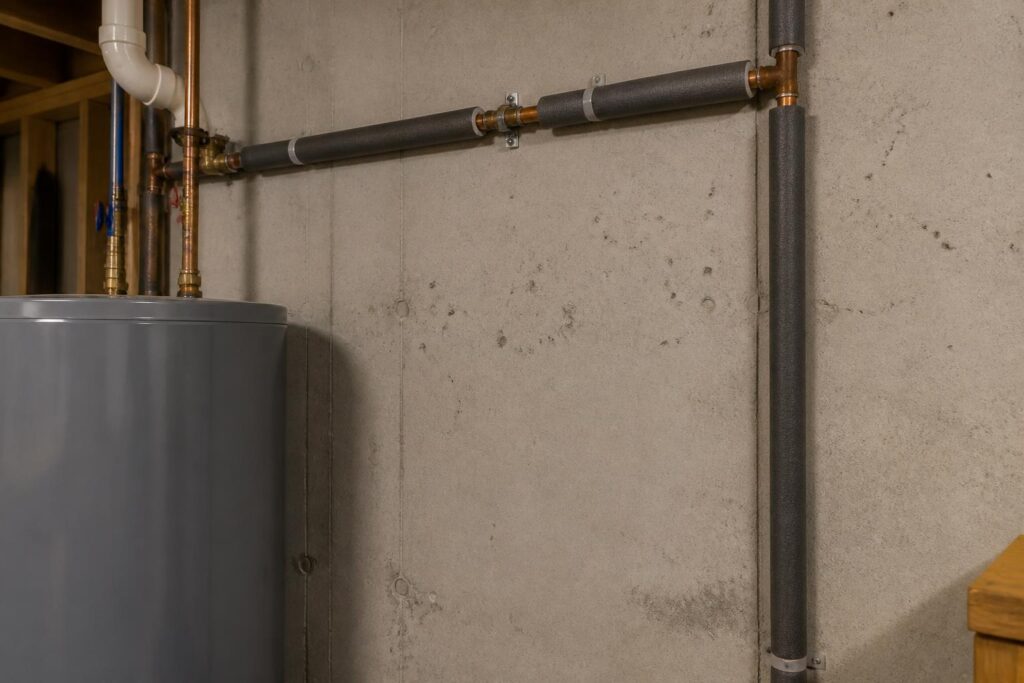
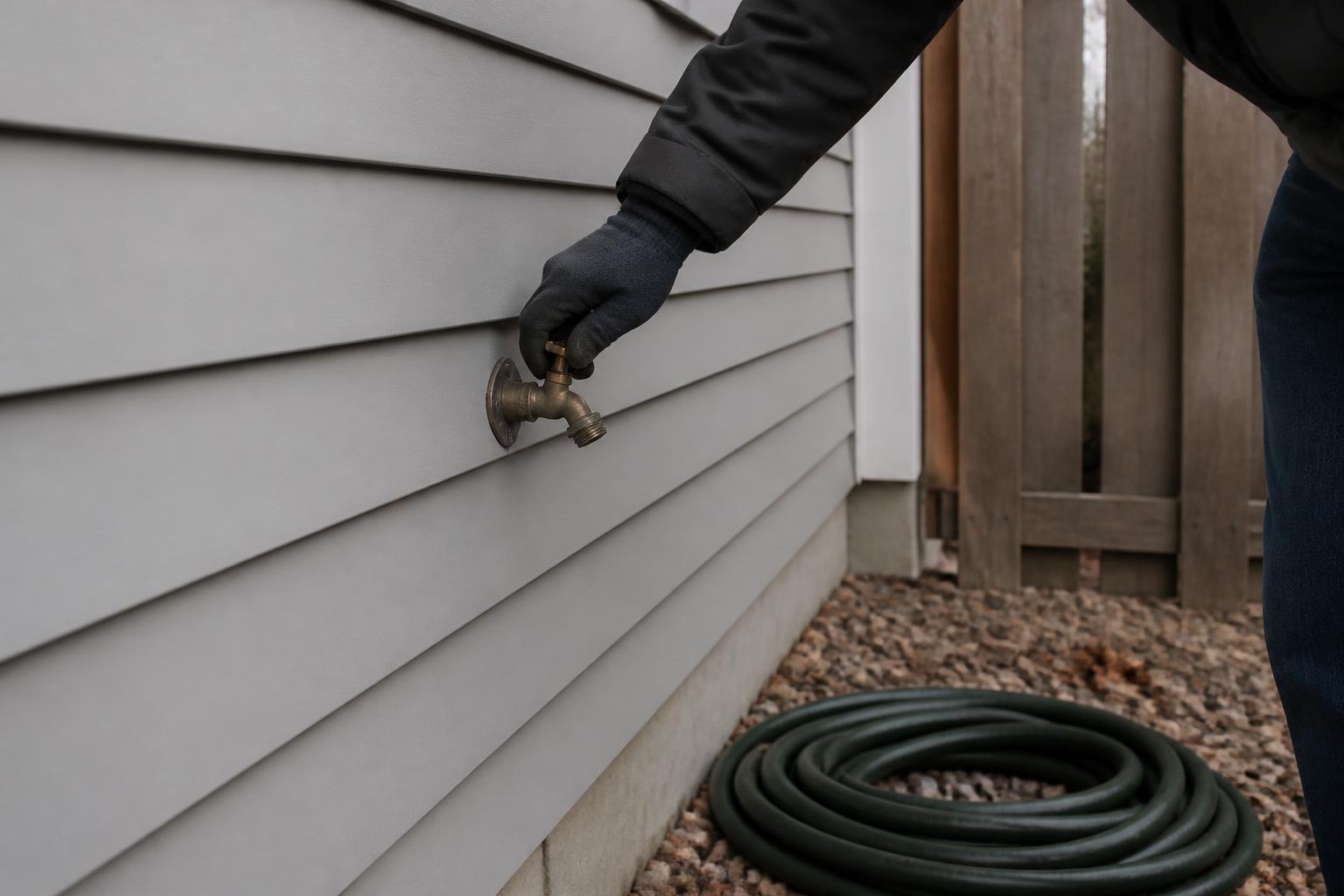
A handful of steps cover most of the risk. Disconnect and drain outdoor hoses, then shut off and drain any exterior hose bibb lines that have a dedicated shutoff. Add or check pipe insulation sleeves on any exposed supply lines in a garage, crawlspace, or basement corner near an exterior wall. Seal drafts around where pipes pass through exterior walls or the foundation, since cold air infiltration around the pipe itself is often the real cause of freezing, not just outside air temperature.
For a vacant property or a home the owner will be away from for an extended stretch in winter, a full water shut-off with the system drained is the most reliable prevention — something we cover in more detail for seasonal situations, though the emphasis here is specifically on pipes that stay in service through the winter.
During a Deep Cold Snap
On the coldest nights, letting a faucet fed by a vulnerable line drip slightly keeps water moving through the pipe, which makes freezing significantly less likely even in a marginal location. Opening cabinet doors under sinks that sit against an exterior wall lets warmer room air reach the supply lines underneath, which is a free step that’s easy to forget. Keeping the thermostat at a consistent temperature overnight — rather than turning it down aggressively to save on heating — also matters more for pipe protection than most people expect, and lines up with the general winterization guidance published by Natural Resources Canada for keeping a home’s mechanical systems running safely through a Canadian winter.
Garages, Sheds, and Detached Structures
Detached garages and outbuildings with their own plumbing — a laundry hookup, a utility sink, or a hose bibb — are some of the highest-risk spots in Durham Region, because these spaces are rarely insulated to the same standard as the main house and often sit unheated for most of the winter. If a garage or shed has any plumbing running to it, that line usually needs either dedicated insulation and heat tape, or a seasonal shutoff and drain if it isn’t used through the coldest months. Skipping this step is one of the most common sources of a surprise spring repair, since a slow leak in a detached structure can go unnoticed for weeks.
Vacant and Rental Properties
A property that sits vacant for any stretch of winter — a rental between tenants, a cottage, or a house on the market — carries more risk than an occupied home, simply because nobody is there to notice early warning signs like a dripping faucet or a colder-than-usual room. For these properties, a full water shut-off at the main with the system drained is worth doing even if it means restarting service before the next occupant moves in. Landlords and property managers in Ajax, Whitby, Clarington, Oshawa, and Pickering often build this into a fall checklist alongside furnace servicing, since both protect the same property from a preventable winter claim.
What a Frozen or Burst Pipe Actually Means
A pipe that freezes doesn’t always burst immediately; ice expanding inside the pipe increases pressure until the pipe fails at its weakest point, which can happen while it’s still frozen or only once it starts to thaw. This is why a pipe that seemed fine during the cold snap can still fail days later as things warm up, and it’s a big part of why plumbing damage claims tied to frozen pipe events often surface after the coldest weather has already passed. Once a pipe splits, the resulting water damage is almost always more expensive than any prevention step would have been, which is the whole reason prevention gets emphasized so heavily every fall.
Our leak detection and repair service handles both the assessment of vulnerable pipe runs before winter and the emergency response if a pipe does fail, and severe cases that happen after hours fall under our emergency plumbing service.
What to Do If a Pipe Has Already Frozen
If a faucet suddenly produces no water during a cold spell, shut off the main water supply first, then look for the section of exposed pipe most likely to be affected — often near an exterior wall, in a crawlspace, or along a garage wall. Gentle heat from a hair dryer or a space heater kept a safe distance away can help thaw a pipe slowly; open flame or a torch should never be used directly on a pipe, since it can scorch nearby framing or, on certain older pipe materials, cause a rupture from uneven heating. If there’s any sign of a split — water pooling, a damp patch on drywall, or a hissing sound — leave the main shut off and call for an emergency assessment rather than continuing to try to thaw it yourself.
Frequently Asked Questions
What temperature causes pipes to freeze?
Pipe freezing risk rises sharply once temperatures stay below roughly -6°C to -12°C for an extended period, especially overnight, though an exposed or poorly insulated pipe can freeze at milder temperatures if wind or drafts are also a factor.
Should I leave a faucet dripping all winter?
Only on the coldest nights, and only for faucets fed by a genuinely exposed line. Leaving every faucet dripping all season isn’t necessary and wastes water; it’s a targeted step for specific high-risk cold spells.
Can a frozen pipe thaw on its own without bursting?
Sometimes, but there’s no reliable way to know in advance. A pipe under enough pressure will fail regardless of whether it thaws slowly or quickly, which is why prevention matters more than trying to manage a pipe that’s already frozen.
Is a detached garage or shed more likely to have frozen pipes than the main house?
Yes, in most cases. Detached structures are rarely insulated to the same standard as a house, so any plumbing running to a garage, shed, or outbuilding deserves its own dedicated protection or a seasonal shutoff.
Do you handle frozen pipe repairs across Durham Region?
Yes. We respond to frozen and burst pipe calls across Ajax, Whitby, Clarington, Oshawa, and Pickering, and we can also assess exposed pipe runs before winter to reduce the chance of a call in the first place.
Call Hayes Plumbing
If you have exposed pipes you’re worried about before winter, or a pipe has already frozen or burst, call Hayes Plumbing & Bathroom Renovations at (905) 576-3043 or use the contact page to book a check anywhere in Durham Region. A short insulation and shutoff review now is far cheaper than a burst-pipe repair in January.