water heater expansion tank Oshawa homeowners hear about most often right after a plumber points out that their tank is on a “closed” system — usually during a water heater replacement, a backflow preventer install, or after the municipality adds a check valve at the meter. It sounds like an upsell the first time you hear it, but an expansion tank solves a real physical problem: it gives heated water somewhere safe to go when it has nowhere else to expand.
This guide covers what an expansion tank actually does, how to tell if your home needs one, and what happens if a system that needs one doesn’t have it.
Why Hot Water Needs Somewhere to Expand
Water expands as it heats up — not by a huge amount, but enough to matter inside a sealed pipe system. In an older “open” system, that extra volume has somewhere to go: it pushes backward through the water meter and out into the municipal main, so pressure never builds up inside the house. Once a backflow preventer, a pressure-reducing valve, or certain check valves are added to a home’s supply line, that path closes. The system becomes “closed,” and every time the water heater fires, the small volume of expanding water has nowhere to escape except further pressure buildup inside your own pipes.
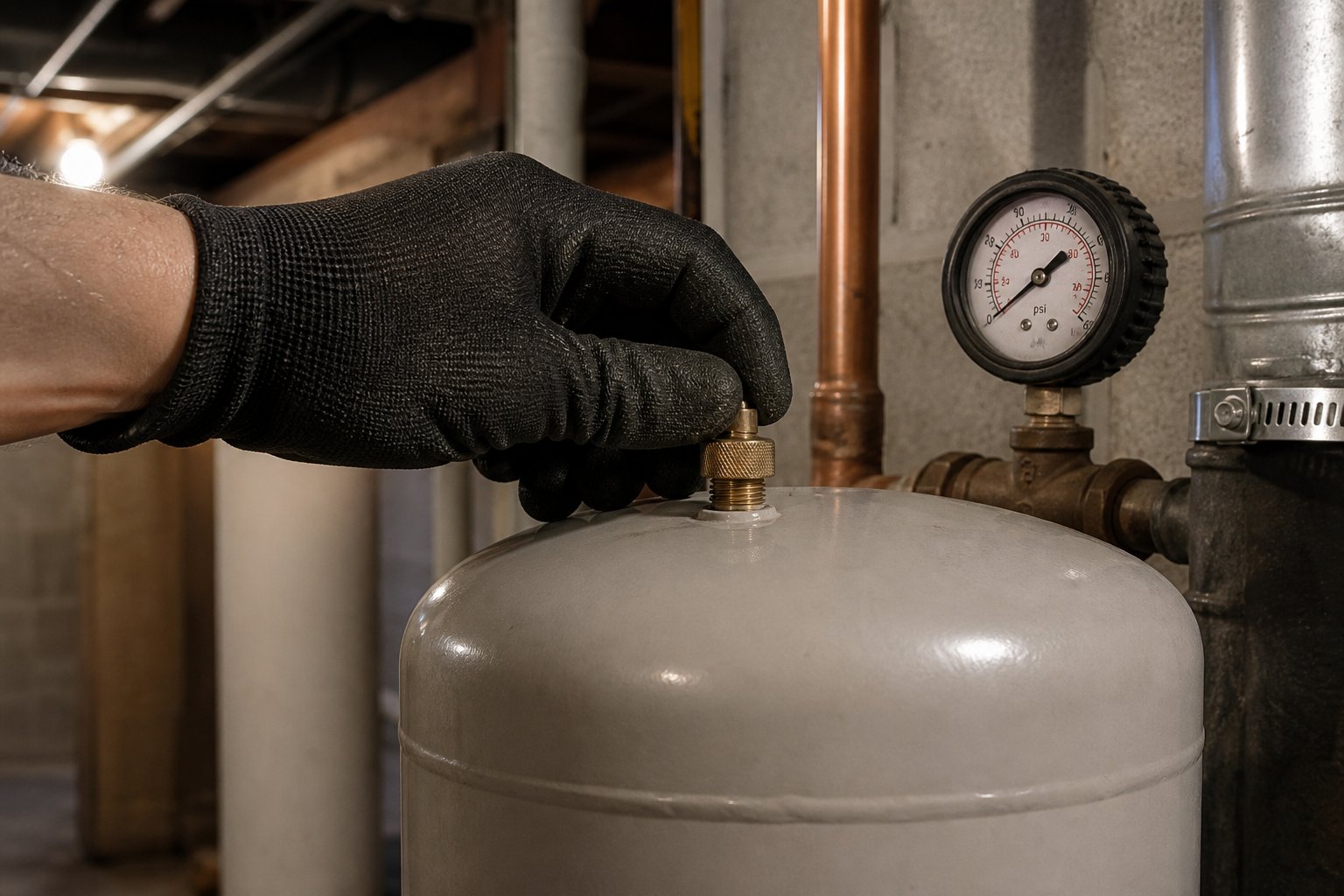
An expansion tank fixes this by giving that expanding water a cushioned space to move into. Inside the tank, a rubber bladder separates a pocket of compressed air from the plumbing system. As pressure rises during a heating cycle, water pushes into the tank and compresses the air pocket instead of stressing the rest of the system. When the water cools and contracts again, the tank pushes that same water back out. It’s a small, unglamorous fitting, but it’s doing continuous work every single day the water heater is in use.
What Happens Without One on a Closed System
On a closed system, going without an expansion tank doesn’t usually cause an immediate failure — it causes gradual wear that shows up as a handful of specific symptoms. Homeowners often notice water hammer (a banging or shuddering sound in the pipes when a fixture shuts off), a pressure-relief valve on the water heater that drips or weeps periodically, or a toilet fill valve that seems to run slightly longer than it should as system pressure spikes during heating cycles.
Left unaddressed, chronically elevated pressure shortens the life of the water heater’s tank, stresses fitting connections and solder joints throughout the home, and can eventually cause a supply line or valve to fail at the weakest point in the system rather than at the water heater itself. None of this happens overnight, which is exactly why it’s easy to miss until something finally gives.
How to Tell If Your Home Has a Closed System
A few questions help narrow it down before a plumber ever looks at the mechanical room:
- Has a backflow preventer or check valve been added at the water meter or main shutoff in the last few years, often required by the municipality?
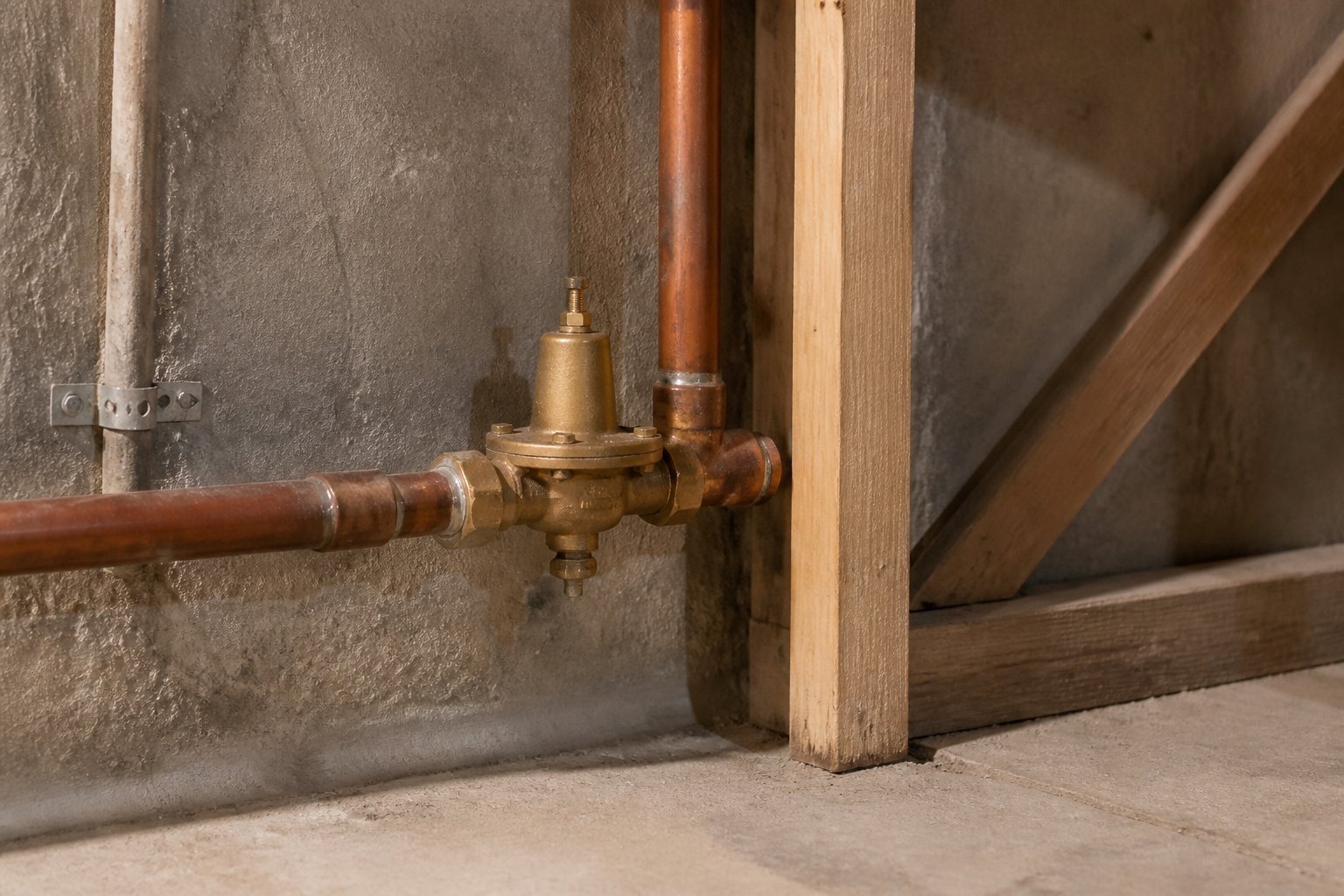
- Is there a pressure-reducing valve (PRV) installed where the main line enters the home, usually a bell-shaped brass fitting just after the shutoff?
- Does the water heater’s pressure-relief valve drip occasionally, especially shortly after the tank finishes a heating cycle?
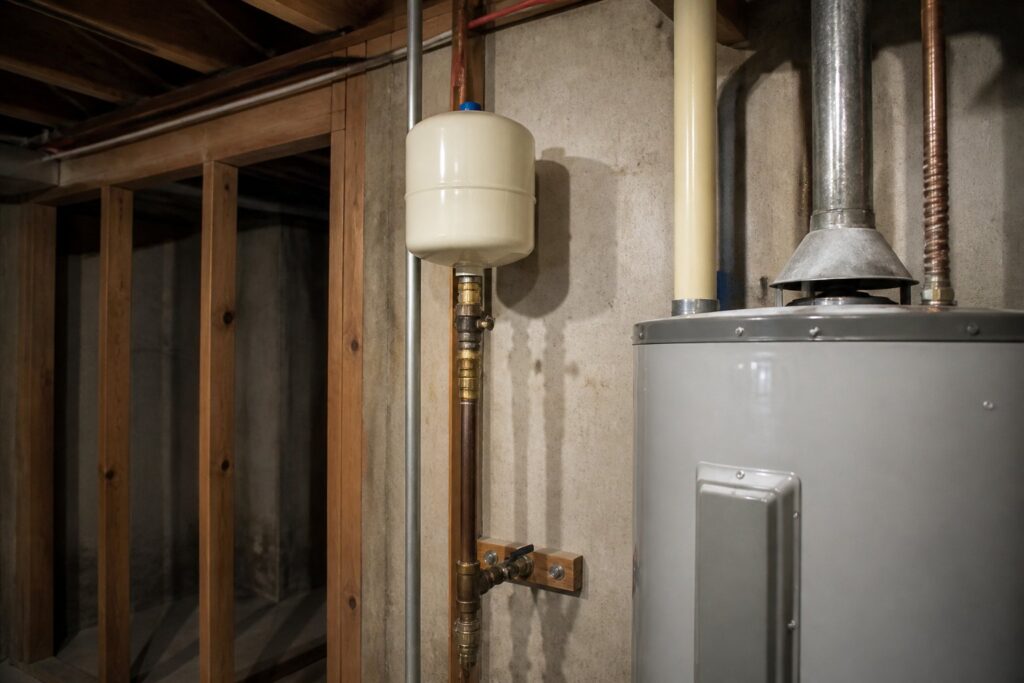
- Is there already a small tank — roughly the size of a large propane cylinder — mounted on a pipe near the water heater? If so, one may already be installed.
If any of the first three apply and there’s no expansion tank already in place, that’s a system that’s very likely running higher pressure swings than it should be.
Sizing and Placement
An expansion tank is sized to the water heater’s tank capacity and the home’s static water pressure, not just picked off the shelf at a fixed size. A tank that’s too small can’t absorb enough expansion to matter, while the air pre-charge inside the tank also has to be set to match the home’s static pressure — a mismatch there means the tank does less work than it should, even if the size is otherwise correct. It’s typically installed on the cold water supply line feeding the water heater, close enough to the tank that it responds to pressure changes right where they start.
Our general plumbing visits cover this kind of system check as a matter of course whenever we’re already working on a water heater, a backflow device, or a PRV — it’s a quick thing to verify, and it’s far cheaper to add proactively than to replace a water heater or valve that failed under years of unmanaged pressure. A properly protected, well-maintained water heater also supports the broader home energy-efficiency guidance published by Natural Resources Canada, since a tank under constant excess pressure has to work harder and wears out sooner.
What a Proper Installation or Check Involves
When we install or inspect an expansion tank, we start by checking the home’s static water pressure at a hose bib or laundry connection, since that number determines the correct air pre-charge for the tank. From there we confirm the tank is sized correctly for the water heater it’s paired with, mount it securely on a bracket rather than letting it hang unsupported on the pipe, and pressure-test the connection before calling the job done.
If a tank is already installed but hasn’t been checked in years, the air bladder inside can fail over time — usually diagnosed by tapping the tank to feel for water sloshing near the top, which shouldn’t happen if the bladder is intact. A failed bladder tank stops doing its job even though it’s still sitting there, which is why an aging tank is worth a quick check the same way a water heater itself is.
Frequently Asked Questions
Do all homes need a water heater expansion tank?
Only homes with a closed plumbing system need one — meaning a backflow preventer, PRV, or certain check valves are already present. On a fully open system where expansion can still push back toward the municipal main, an expansion tank isn’t required, though it’s never harmful to have one.
How long do expansion tanks last?
Most expansion tanks last 5 to 10 years before the internal air bladder needs replacing or the tank itself needs to be swapped out. Checking it whenever the water heater gets serviced is an easy way to catch a failed bladder before it stops protecting the system.
Can a banging pipe sound mean I need an expansion tank?
It can be one cause. Water hammer has a few possible sources, but on a closed system with a water heater nearby, an undersized or missing expansion tank is one of the more common explanations, especially if the banging tends to happen shortly after hot water is used.
Do you install expansion tanks for Oshawa homes?
Yes. We check for this whenever we’re already working on a water heater, backflow device, or pressure-reducing valve, and we install or replace expansion tanks as part of our general plumbing service.
Call Hayes Plumbing
If your water heater’s relief valve drips, your pipes bang after hot water use, or you’re not sure whether your home is on a closed system, call Hayes Plumbing & Bathroom Renovations at (905) 576-3043 or use the contact page to book a check in Oshawa. A quick pressure check now is a lot less expensive than a water heater replacement caused by years of unmanaged pressure.